
 42-44 Princes Highway, FAIRY MEADOW, NSW 2519



Snoring Vs. Obstructive Sleep Apnea
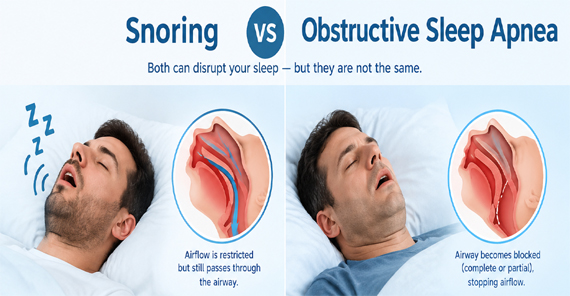
Almost everyone snores occasionally. A heavy night, sleeping flat on your back, or a winter head cold can cause anyone to saw logs now and then. However, when loud, persistent snoring turns into nightly gasping, morning exhaustion, or chronic daytime brain fog, it often points to something much more serious than a harmless bedroom annoyance: Obstructive Sleep Apnea (OSA).
At Fairy Meadow Family Dental, we frequently consult with patients from Wollongong and across the northern Illawarra who are exhausted, frustrated, and looking for answers. Understanding the difference between ordinary primary snoring and obstructive sleep apnea is the first critical step toward protecting your cardiovascular health, your energy levels, and your quality of life.
What Is the Difference Between Snoring and Obstructive Sleep Apnea?
While both conditions stem from airway resistance during sleep, their physiological impact on your body is vastly different.
Primary Snoring (Partial Airway Vibration)
When you fall asleep, the muscles in the roof of your mouth, tongue, and throat relax. In primary snoring:
• The airway narrows slightly, but airflow remains continuous.
• As you inhale and exhale, passing air causes the relaxed soft tissues—such as the soft palate and uvula—to vibrate, producing the familiar snoring sound.
• Crucially, blood oxygen levels stay normal, and you do not repeatedly stop breathing throughout the night.
While primary snoring may disrupt your bed partner’s rest, it generally does not pose the severe cardiovascular risks linked to sleep apnea.
Obstructive Sleep Apnea (Complete or Near-Complete Airway Collapse)
Obstructive Sleep Apnea is a serious sleep-related breathing disorder:
• The throat muscles and base of the tongue relax excessively, causing the soft airway walls to completely or partially collapse shut.
• Airflow is blocked for 10 seconds or longer, often dozens or even hundreds of times each night (measured clinically as the Apnea-Hypopnea Index, or AHI).
• As oxygen levels in your bloodstream plummet, your brain detects the danger and sends a surge of adrenaline to briefly jolt you awake—often accompanied by a loud snort, gasp, or choking sound—so you can reopen the airway.
• Because these awakenings (micro-arousals) happen subconsciously, most people have no memory of them, waking up wondering why they feel drained despite spending eight hours in bed.
How to Tell the Two Apart: Key Differences
To better evaluate your symptoms, consider how primary snoring and obstructive sleep apnea differ across the following areas:
• Airway Function: Primary snoring involves a narrowed airway where air continues to pass through, whereas sleep apnea causes the airway to collapse entirely, repeatedly halting airflow.
• Sound and Breathing Patterns: Snoring produces a steady, rhythmic, buzzing sound. In contrast, sleep apnea is marked by loud snoring punctuated by sudden silent pauses, followed by abrupt choking or gasping.
• Morning Condition: People who experience simple snoring typically wake up feeling refreshed. Those living with sleep apnea frequently suffer from morning headaches, a parched dry mouth, and an overwhelming feeling of exhaustion.
• Daytime Energy and Alertness: A snorer usually retains normal focus throughout the day, while an individual with sleep apnea battles chronic daytime drowsiness, nodding off during meetings, reading, or driving.
• Oxygen Stability: Blood oxygen levels remain stable with ordinary snoring, but drop significantly throughout the night during apnea episodes.
• Long-Term Health Impact: While simple snoring primarily causes social or relationship friction, untreated sleep apnea presents substantial cardiovascular dangers, including hypertension and increased stroke risk.
Red-Flag Signs You Shouldn’t Ignore
If you or your partner notice any of the following warning signs, it is time to look beyond over-the-counter nasal strips and seek professional evaluation:
1. Witnessed Pauses in Breathing: Your partner notices that your breathing stops completely, followed by an abrupt gasp, snort, or body jerk.
2. Chronic Morning Headaches: Caused by oxygen deprivation and elevated carbon dioxide levels in the blood during the night.
3. Severe Morning Dry Mouth or Sore Throat: Breathing heavily through an open mouth all night dries up protective saliva, increasing the risk of gum inflammation and tooth decay.
4. Daytime Exhaustion & Brain Fog: Struggling to focus at work, irritability, mood swings, or falling asleep during meetings.
5. Frequent Nighttime Urination (Nocturia): The heart releases a hormone when under pressure from airway collapse, signalling the kidneys to flush fluids overnight.
The Hidden Health Risks of Untreated Sleep Apnea
Ignoring obstructive sleep apnea does far more damage than causing fatigue. Over time, the repeated cycles of oxygen drops and adrenaline spikes place immense strain on your body, significantly increasing your risk of:
• High Blood Pressure (Hypertension): Often resistant to standard medications.
• Cardiovascular Disease: Higher rates of heart attacks, atrial fibrillation, and arrhythmias.
• Type 2 Diabetes: Fragmented sleep increases insulin resistance.
• Stroke & Cardiovascular Events: Elevated systemic inflammation damages blood vessel walls.
• Motor Vehicle & Workplace Accidents: Severe daytime microsleeps drastically impair reaction times.
How a Dentist Helps: Custom Dental Sleep Appliances
Many patients assume the only solution for obstructive sleep apnea is a Continuous Positive Airway Pressure (CPAP) machine. While CPAP remains a gold standard for severe cases, many patients struggle with bulky facial masks, noisy pumps, dry nasal passages, or claustrophobia, leading them to abandon treatment.
For patients with primary snoring, mild-to-moderate OSA, or those who cannot tolerate CPAP, custom dental sleep appliances—specifically Mandibular Advancement Splints (MAS)—offer an effective, comfortable, and discreet alternative.
How a Mandibular Advancement Splint Works
• Gentle Jaw Positioning: Custom-moulded to your upper and lower teeth, the appliance gently holds your lower jaw (mandible) slightly forward during sleep.
• Stabilises the Tongue: Moving the jaw forward tightens the soft palate and prevents the base of the tongue from falling backwards and blocking the throat.
• Clear, Quiet Airway: By keeping the airway open and stable, airflow remains smooth, eliminating tissue vibration (snoring) and preventing airway collapse.
• Portable and Silent: With no hoses, cords, or motors, dental sleep appliances fit in a pocket case, making them ideal for travel, shift work, and comfortable side sleeping.
The Treatment Journey at Fairy Meadow Family Dental
We follow a rigorous, medical-collaborative approach to sleep therapy:
1. Initial Clinical Assessment: We evaluate your airway, jaw alignment, soft palate, and dental health at our Fairy Meadow clinic, checking for signs of nighttime clenching (bruxism), tooth wear, and restricted airway space.
2. Formal Sleep Study (Polysomnography): Because only a qualified sleep physician can diagnose obstructive sleep apnea, we collaborate with local sleep specialists or coordinate home sleep studies to measure your exact AHI and oxygen levels.
3. Precision Digital Impression & Custom Fabrication: Once diagnosed, we take digital scans of your teeth to fabricate a durable, medical-grade oral appliance designed specifically for your bite.
4. Titration and Follow-Up Care: We guide you through micro-adjustments to optimize airway opening while maintaining jaw comfort, ensuring long-term health and peaceful nights for you and your household.
Reclaim Restful Sleep and Protect Your Health
Snoring does not have to dictate your morning energy or disturb your family’s peace. Whether you are dealing with chronic snoring or suspect obstructive sleep apnea, our caring team is here to help you breathe easily and sleep deeply again.

 42-44 Princes Highway, FAIRY MEADOW, NSW 2519

